
Don't Pop!
Gimica GmbHAction
3.9127.00 Reviews
- Version
- 1.1.0
- Installs
- 50.00K
- Age Rating
- Everyone
Screenshots

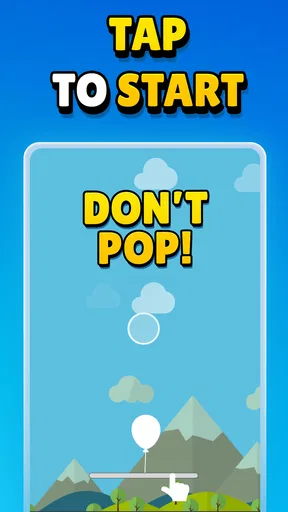
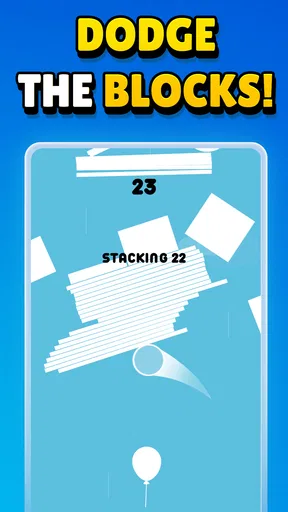
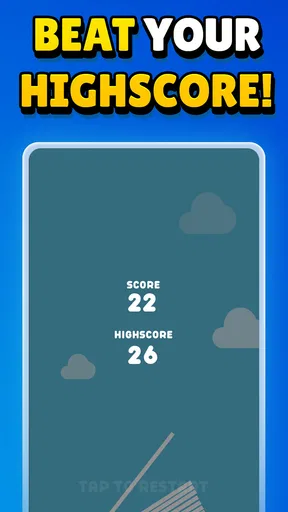
Our Review of Don't Pop!
 Analysis by Appyee
Don't Pop! is a small action game built around one direct question: how long can you stay alive before making the mistake that ends the run? I found its appeal in that immediate pressure. There is no need to learn a large world or commit to a long session before understanding the basic idea. You start, react, and quickly discover whether the game’s challenge suits your reflexes.
That simplicity is also the main reason to approach it with realistic expectations. This is not the kind of action game I would choose for a deep story, a large progression system, or a long list of activities. It is better understood as a focused survival-style experience for short bursts of attention. When I wanted something easy to open while waiting or taking a quick break, that narrow purpose worked in its favor.
How the game feels in everyday play
The first thing I noticed is how quickly the game communicates its purpose. The short description, “Don’t Pop!”, is not hiding a complicated premise. The central task is survival, and that makes the opening feel approachable even if you do not usually play action games. You can get into the rhythm without studying a manual or remembering a large collection of rules.
That makes it especially suitable for a spare-minute routine. Imagine waiting for a bus, sitting through a short break, or having a few minutes before an appointment. I would not open it expecting a complete gaming session with a beginning, middle, and ending. I would open it for a compact challenge, try to last longer than before, and stop when my attention moved elsewhere.
The game’s strongest quality is the tension created by a simple objective. Survival challenges often work because every extra moment feels valuable. A run that begins casually can become surprisingly demanding once you have settled into the controls and started thinking about avoiding the next mistake. That gradual pressure gives the experience more staying power than the short premise might suggest.
At the same time, players who need frequent variety may find the narrow design limiting. If your favorite mobile action games offer several modes, characters, missions, or a large upgrade path, this is unlikely to replace them. I see it as a focused side game rather than an all-purpose action title.
Speed expectations before you start
Because the concept is so immediate, I expected the game to feel quick to enter and easy to understand. That expectation matters more here than it would in a large role-playing game. A compact action title has to make its first moments count: delayed input, a confusing opening, or a crowded interface would work against the entire idea.
In practical terms, the best way to judge it is not by comparing it with a visually demanding console-style game. Its value comes from the short loop of starting a run, responding to danger, and trying again. The experience is designed around reaction and repetition, so a player who enjoys fast restarts will probably feel more at home than someone who prefers slow exploration.
I also recommend approaching the first few attempts as familiarization rather than as a serious score chase. The opening runs help you understand how much attention the game expects from you and whether its timing feels natural on your device. That is a useful test because action games can feel very different depending on screen size, touch sensitivity, and how comfortably you hold the phone.
Do not assume that a simple premise means effortless play. The controls may be easy to understand, but survival games become demanding through timing and concentration. I found that the mental load can rise even when the visual presentation remains straightforward. The challenge is less about memorizing a complex system and more about staying composed when a run lasts longer than expected.
What happens during heavier play
The most demanding moments are likely to come when you keep playing beyond the comfortable opening phase. Early attempts let you react naturally, but longer runs encourage a different kind of focus. You begin watching for patterns, trying to avoid rushed decisions, and balancing the desire to continue against the risk of throwing away a good attempt.
This is where the game can become more engaging than its store summary suggests. The survival question creates a personal target even without needing a large amount of content. I often find that this type of design turns a short session into “one more try,” especially when the previous run ended because of a small lapse in attention rather than a complete misunderstanding of the game.
There is a trade-off, though. Repetition is part of the appeal, but it can also expose the limits of a compact action game. If you want every session to introduce a new objective or a fresh story beat, repeated survival attempts may start to feel too similar. The right audience is someone who enjoys refining reactions and chasing improvement, not someone who needs constant novelty.
A useful personal rule is to stop after a few frustrating attempts instead of forcing the game. Because the loop is built around survival, impatience can make your decisions worse. Taking a short break and returning later may be more satisfying than repeatedly restarting while distracted. That is not a feature claim; it is simply the kind of play habit that fits this particular challenge.
Reliability and the value of short sessions
Don't Pop! comes from Gimica GmbH and is listed as a free action game for Everyone. Those details make it approachable for a broad audience, including players who want to test a lightweight idea without committing money first. The age classification also makes it easier to consider for general family use, although younger players may still need guidance about screen time and frustration.
The game has an average rating of 3.9 from around 1.9 thousand ratings, with more than a hundred written reviews. I read that overall response as reasonably positive but not a guarantee that every player will enjoy the same things. A rating in that range often fits a game with a clear audience: satisfying for people who like its central loop, less convincing for those who expect a broader package.
It has passed 50 thousand installs, which suggests that the concept has reached a meaningful group of mobile players. I would not treat that number as proof of perfect stability or universal appeal. It is better viewed as a sign that the game is easy enough to discover and try, while the rating gives a more balanced indication of how people respond once they have played it.
For reliability, I would pay attention to how the game behaves across several short launches rather than judging it from one session. A game like this depends on quick repetition, so interruptions or an awkward return to a run would be more noticeable than they might be in a slower title. If you are using it during spare moments, the ability to resume your routine comfortably matters almost as much as the action itself.
The current version is 1.1.0, and the listed release date is April 13, 2026. I would keep the game updated through the normal store process, especially because early versions can change as the developer adjusts the experience. Updating is also a sensible step if you notice unusual behavior after installing it, although no app should be judged as unstable without seeing the issue consistently.
Device limits and practical expectations
The minimum operating-system requirement is Android 7.0. That makes the game available to many older Android phones and tablets, but compatibility on paper is not the same as identical comfort on every device. Screen dimensions, touch response, available storage, and general device condition can all affect how pleasant a reaction-based game feels.
On a smaller phone, the main concern is not necessarily raw power. It is whether the action remains easy to see and whether your fingers cover important parts of the screen. A larger display can make interaction more comfortable, while an older device with a tired battery or a busy background may make a short game feel less responsive. Those are practical considerations worth checking before deciding that the game itself is at fault.
I would also avoid testing it for the first time while the phone is already overloaded with other demanding tasks. Close anything you do not need, let the device settle, and then see how the game feels during several attempts. This is a better everyday test than relying on specifications alone. If it remains comfortable during repeated short sessions, it is probably a good fit for your normal use.
Resource demands are difficult to judge responsibly without making up measurements, so I would not promise that it uses very little battery or memory. The sensible expectation is simply that its focused action format should be evaluated on your own device. Watch for heat, battery drain, or sluggish touch response during your typical sessions, and compare that experience with the other games you already use.
Players with older hardware should be especially attentive to recovery after interruptions. A phone call, notification, screen lock, or accidental exit can matter more in a survival attempt than in a turn-based game. Before investing in a long run, I would make sure the game returns to a usable state after a brief interruption. That small check can prevent avoidable frustration.
Who will enjoy the challenge most
I would recommend this game to players who like compact action loops and personal improvement. It suits someone who enjoys testing reactions, repeating a task to become more consistent, and fitting play into short gaps in the day. It is also a reasonable choice for a newcomer who wants an uncomplicated entry into action games rather than a title filled with menus and systems.
It may work well as a secondary game alongside a larger favorite. For example, I could spend an evening with a story-driven game and use this one the next morning for a few quick attempts. The contrast is useful: one provides depth and immersion, while this one offers a direct challenge without asking me to remember a plot or manage a long-term plan.
I would skip it if your priority is narrative, exploration, strategic team building, or a wide range of missions. I would also be cautious if repeated failure quickly makes you angry. The survival format naturally puts mistakes at the center of the experience, so the game rewards patience more than casual button pressing.
It is worth remembering that free does not automatically mean frictionless. The absence of a purchase price makes trying it easy, but the real cost can be attention: the game asks you to stay focused and accept that a run may end suddenly. For me, that is fine in short doses. For someone looking for a relaxing game with low pressure, it may be the wrong match.
How it compares with familiar action alternatives
Compared with large action games, Don't Pop! is much easier to understand but offers less breadth. Traditional mobile action adventures usually give you levels, objectives, unlocks, or a world to explore. Their appeal comes from variety and progression. This game takes the opposite route, making the survival attempt itself the main event.
Compared with endless runners, it shares the idea of continuing until a mistake ends the run, but the appeal is not necessarily the same. Endless runners often emphasize lane changes, collecting, and a constantly moving route. Here, the important question is how well you manage the specific danger represented by the game’s central premise. If you prefer a clear survival test over collecting items along a track, this narrower approach may feel cleaner.
Compared with puzzle-action games, it is likely to demand more immediate reactions and less deliberate planning. That makes it a better fit when you want quick engagement, but a worse fit when you want to pause and consider several possible solutions. There is no reason to choose one style permanently; I would keep this installed for reflex-focused moments and use a puzzle game when I want a calmer mental pace.
The key trade-off is depth versus immediacy. Don't Pop! earns its place by reducing the distance between opening the app and playing. The usual alternatives may provide more content, but they also ask for more time and attention before they become rewarding. If your phone is mainly a tool for brief breaks, that difference is important.
Small habits that improve the experience
My first practical tip is to play with a clear grip and a stable posture. Reaction games punish awkward hand placement, especially when you are trying to play one-handed while walking or carrying something. I would wait until I am seated or otherwise steady, because the improvement in control is more valuable than squeezing in an unsafe or distracted attempt.
Second, separate learning attempts from record attempts. During the first few runs, focus on understanding how the game responds rather than trying to survive perfectly. Once the controls feel familiar, begin treating each run as a controlled experiment: change one habit, such as reacting earlier or staying calmer, and see whether the result improves. This turns repetition into useful practice instead of random restarting.
Third, use interruptions as a test of fit. Start a short session, lock the phone briefly, return to the app, and see whether the recovery feels comfortable for your routine. I would not do this during a run I care about, but it is a practical way to learn whether the game suits commuting, waiting rooms, or other situations where your attention may be divided.
Finally, compare the game with your own patience rather than with someone else’s score. A survival title can become unpleasant when every attempt is treated as a judgment. I get more value from it when I use each run to improve one response and accept that some failures are simply part of the loop. That mindset is especially helpful for younger players or anyone who tends to keep playing after the fun has gone.
My performance verdict
Don't Pop! is a focused action game with a clear identity: survive, react, and try again. I like that it does not require a large commitment before revealing what it wants from me. Its strongest use case is the short session, where a simple objective and immediate pressure can provide a satisfying break.
My judgment on speed and stability is deliberately practical rather than exaggerated. The game should be assessed on the phone you plan to use, particularly if that device is older or often busy with other tasks. The Android 7.0 minimum makes it accessible to a wide range of hardware, but comfortable touch response and reliable recovery matter more than a compatibility label for this kind of play.
The free price and Everyone rating make it easy to try, while the 3.9 average shows a generally favorable but measured reception. I would recommend downloading it if you enjoy repetition, reflex challenges, and personal bests. I would not make it your main action game if you need story, variety, or a substantial progression system.
For me, the final question is simple: do you enjoy the feeling of surviving a little longer after a near mistake? If yes, this compact release from Gimica GmbH is worth a look. If that loop sounds repetitive rather than motivating, a level-based action game or a puzzle title will probably offer better value for your time. Its best quality is the directness of the challenge, and its main limitation is that the same directness leaves little room for players seeking a broader experience.
Verdict
Strengths of Don't Pop!
- Simple one-tap gameplay that is easy to learn immediately.
- Short sessions make it suitable for quick breaks or casual play.
- Bright visuals and playful presentation give it an approachable feel.
- Increasing difficulty keeps the challenge engaging over time.
- Minimal controls work well on touchscreen devices.
Limitations of Don't Pop!
- The gameplay can become repetitive after extended play sessions.
- Mistakes may feel frustrating when difficulty rises quickly.
- Limited depth may not satisfy players seeking complex mechanics.
- Progress can depend heavily on timing and quick reactions.
- Ads or optional purchases may interrupt the otherwise simple experience.
Other Releases by Gimica GmbH
View All


Similar Picks in This Category
View All
Temple Run 2: Endless Escape
Imangi Studios4.1

PUBG MOBILE
Level Infinite4.3

Free Fire: 9th Anniversary
GARENA INTERNATIONAL I4.4

Talking Tom: Hero Dash Run
Outfit7 Limited4.3

slither.io
Lowtech Studios3.9

Sniper 3D:Gun Shooting Games
Wildlife Studios4.6
Frequently Asked Questions
What is Don’t Pop! and how is it played?
Don’t Pop! is a casual reflex and timing game built around a simple but challenging objective: avoid popping the wrong objects while reacting quickly to what appears on screen. Gameplay is easy to understand, but the pace gradually becomes more demanding. Short rounds make it suitable for quick sessions, while increasing difficulty encourages repeated attempts and score improvement.
Is Don’t Pop! free to download and play?
Don’t Pop! can generally be downloaded for free, although the exact availability and pricing may vary depending on whether you use Android or iOS. The game may include optional advertisements, in-app purchases, or other monetization features. Before installing, it is worth checking the store listing for current details about ads, paid items, and whether purchases are required to access the complete experience.
Does Don’t Pop! require an internet connection?
For basic gameplay, Don’t Pop! appears suited to offline play, which makes it convenient for short sessions while travelling or when a stable connection is unavailable. However, certain features may still depend on internet access, including advertisements, analytics, updates, leaderboards, cloud services, or purchases. Requirements can change with future versions, so check the app-store description after installation.
Is Don’t Pop! suitable for children and all age groups?
The game uses simple controls and a straightforward concept, so it can be accessible to children, teenagers, and adults. Nevertheless, parents should review the official age rating and privacy information before allowing younger players to use it. If advertising, in-app purchases, or online ranking features are included, parental controls may be helpful to prevent accidental purchases or unwanted interaction.
What should I know about performance, controls, and permissions before downloading?
Don’t Pop! is designed as a lightweight casual game, so it should run comfortably on many modern Android and iOS devices. The controls are usually based on tapping or quick reactions, making the game easy to start without a tutorial-heavy learning curve. Still, performance may vary on older phones, and you should review the requested permissions and developer privacy policy before installing.
Play our best games!


